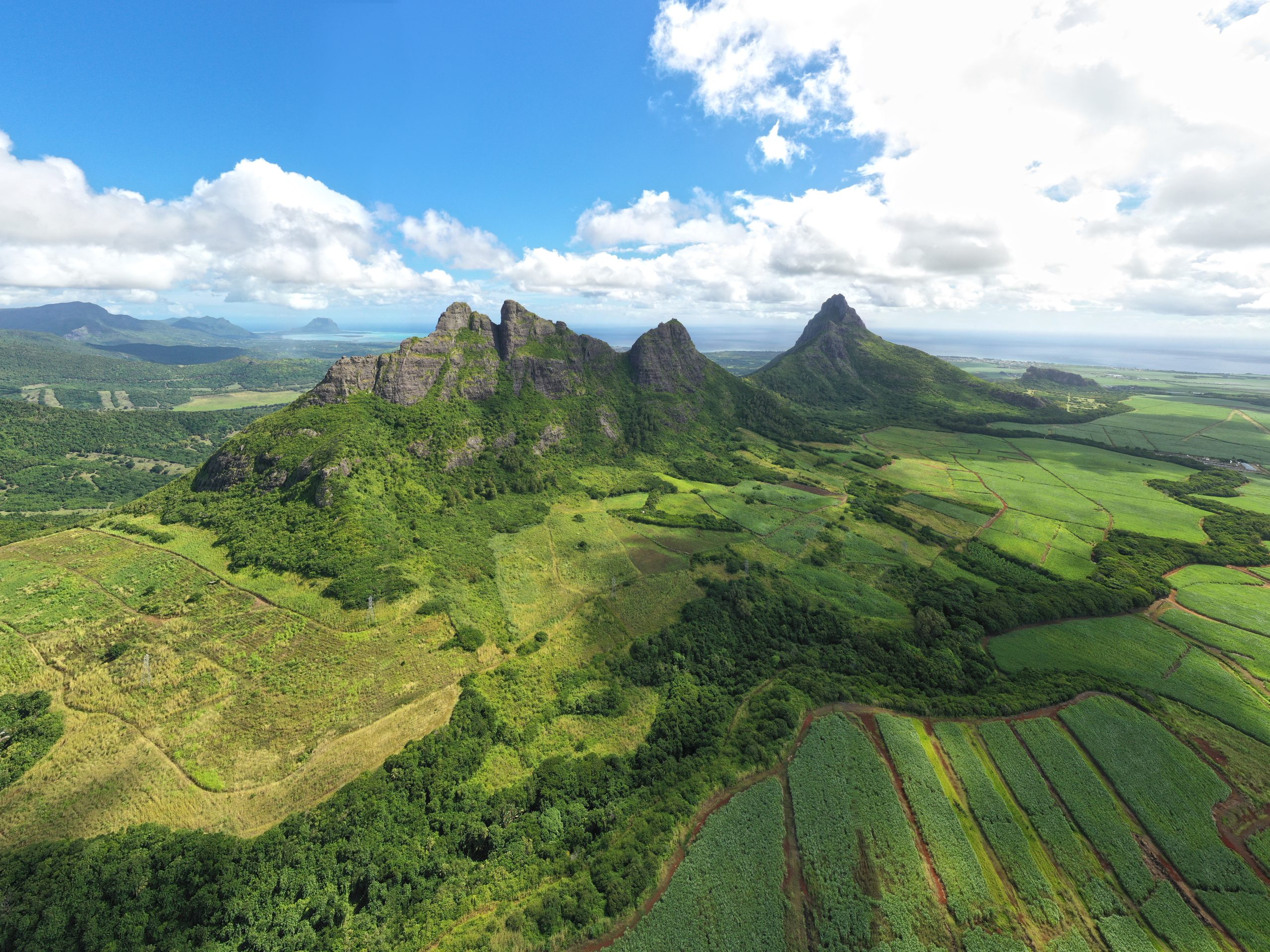
Mauritius, a small independent republic in the middle of the Indian Ocean, is dynamic and constantly cited as an example in the region for its modernity. If you wish to settle there, if you dream of buying a villa in Mauritius, and if you wish to undertake this project in an eco-responsible way, here is how to go about it!
Your expatriation project: a meticulous and thoughtful preparation
Moving abroad is not a decision to be taken lightly, so this is not the time to improvise. Many travellers at heart have tried the experience only to return home empty-handed and deeply disappointed.
Indeed, leaving a country that one has perhaps always known, a place where one has family, friends, work and habits, requires a certain clarity of mind, but also and above all objectives that have been formally studied, analysed and planned in advance. However, the latter are generally not the same and change according to age, personal, professional and family aspirations.
Regarding your “why” to go to Mauritius, start by asking yourself the pivotal question: why do I want to move to this particular country? It may be for expatriation:
To invest in a business and become an entrepreneur;
To buy a villa in Mauritius or even a luxury flat and simply enjoy it for part or all of the year;
To work as a freelancer or as an employee;
To live your retirement differently, with an eco-responsible approach in mind
As for the “how”, Mauritius has been a leading destination for expatriation for several years to the extent that the government has put in place a wide range of visas and permits, specially designed according to the desires of foreign nationals wishing to settle in the country as an investor, professional, self-employed, retired, real estate investor. Some examples for extended stays:
The Family Occupation Permit The Family Occupation Permit is valid for 10 years on the condition that the holder invests USD 250,000 in the COVID-19 Projects Development Fund.
The premium visa This visa, which is free of charge, is intended for non-residents who wish to stay for one year. It is renewable and is designed for tourists, retirees or professionals who wish to come with their families and carry out their activities or work remotely from Mauritius.
Your expatriation project
Activities available in Mauritius
Alone, as a couple, with your family, Mauritius has no shortage of resources to entertain its population, both local and from elsewhere in the world. Whether you love nature, the sea (swimming with dolphins, underwater walking), the sky (parasailing, etc.), culture (museums, historical sites, etc.), sports (trails, hiking, via ferrata, etc.), there is always something to see or do on the island both during the week and at weekends if you are looking for an eco-friendly activity.
Moreover, social networks are overflowing with information about the leisure activities available on the island and expatriate forums also form a dynamic and welcoming network in their own right.
Special mention should be made of Odysséo, the largest aquarium in the Indian Ocean, which has recently opened in Caudan, the marina of Port-Louis.
Challenges encountered by expatriates on site
The mission of an expatriate is to share the daily life of the inhabitants of his host country, a good thing when one knows that Mauritians are a warm, supportive and receptive nation towards newcomers. Among the habits to be integrated, there is of course that of the local language, Mauritian Creole (or Morisian Kreol), a clever mix of French, English, Hindi, Chinese and African dialects. Nevertheless, a large majority of the population understands, reads and speaks French!
A few searches on the internet will allow you to discover a structured language with an official nomenclature. Once you are there, the local population will be your best asset for learning to converse quickly!
Another effort to integrate is the way people shop. While the shops in Mauritius are not dissimilar to those in the West, the choice of products may be slightly different or sold at higher prices. For a serene budget, but also to live your expatriation to the fullest, go to the bazaar for fruit and vegetables, and eat in the small local snack bars.
Finally, island life being what it is, in Mauritius, we like to entertain, so don’t be surprised to be invited to the wedding of your neighbours, a colleague or a client. It is good practice to accept and play the game, even if it is of course possible to decline politely.
Find accommodation in Mauritius
Whether you want to buy a villa in Mauritius or settle down in a luxury apartment, it is strongly advised to approach a reputable real estate agency. Indeed, as an expatriate, the objective is for you to find affordable accommodation close to all amenities. So where to invest in Mauritius?
A certified real estate agent will help you find a villa or apartment that suits your needs. If, for example, you wish to buy a property in Mauritius, he or she will help you understand the many real estate developments specifically designed for foreigners:
IRS – Integrated Resort Scheme, which allows non-residents to buy a very high-end villa in Mauritius within a secure and serviced community. The IRS allows the purchaser and their family members (spouse and children up to the age of 24) to be eligible for a Mauritian residency permit, valid for the duration of ownership.
RES – Real Estate Scheme, which gives the right to stay for 6 months per year on the island or at the residence against an investment of USD 375,000.
PDS – Property Development Scheme, this real estate scheme revolves around flexibility, social contribution, local economy, and respect for the environment. With an investment of at least 375,000 USD, the investor is granted a residence permit.
SCS – Smart City Scheme, which promotes Mauritius as a hub for international business and a sustainable destination. With a minimum investment of $375,000, it makes the purchaser eligible for the residency permit. After 2 years of holding the residency permit, the investor can apply for Mauritian citizenship with a minimum investment of USD 5 million.
G+2 – Ground+2, this scheme allows the purchase of a second-floor flat in a 6-unit development built on freehold land. It does not offer permanent residence.
IHS – Invest-Hotel Scheme, this new scheme allows you to buy a villa in Mauritius, a suite or a unit that is part of a hotel under development.
Contact our agency and our team of experts will be happy to assist you in your expatriation project.
1. A major reversal in the Finance Bill 2026 The revised Finance Bill 2026 clearly proposes the complete removal of the restrictive provisions that had initially raised concerns […]
Mauritius’ real estate sector is entering a new era of regulation. Established under the Real Estate Agent Authority Act 2020 and operating under the Ministry of Housing and […]
Far beyond the postcards and idyllic beaches, Mauritius also pulses to the rhythm of a vibrant and deeply rooted musical scene. From the fusion of traditional sounds to global […]